H-MASTER
A full mastering chain in one plugin.
£99
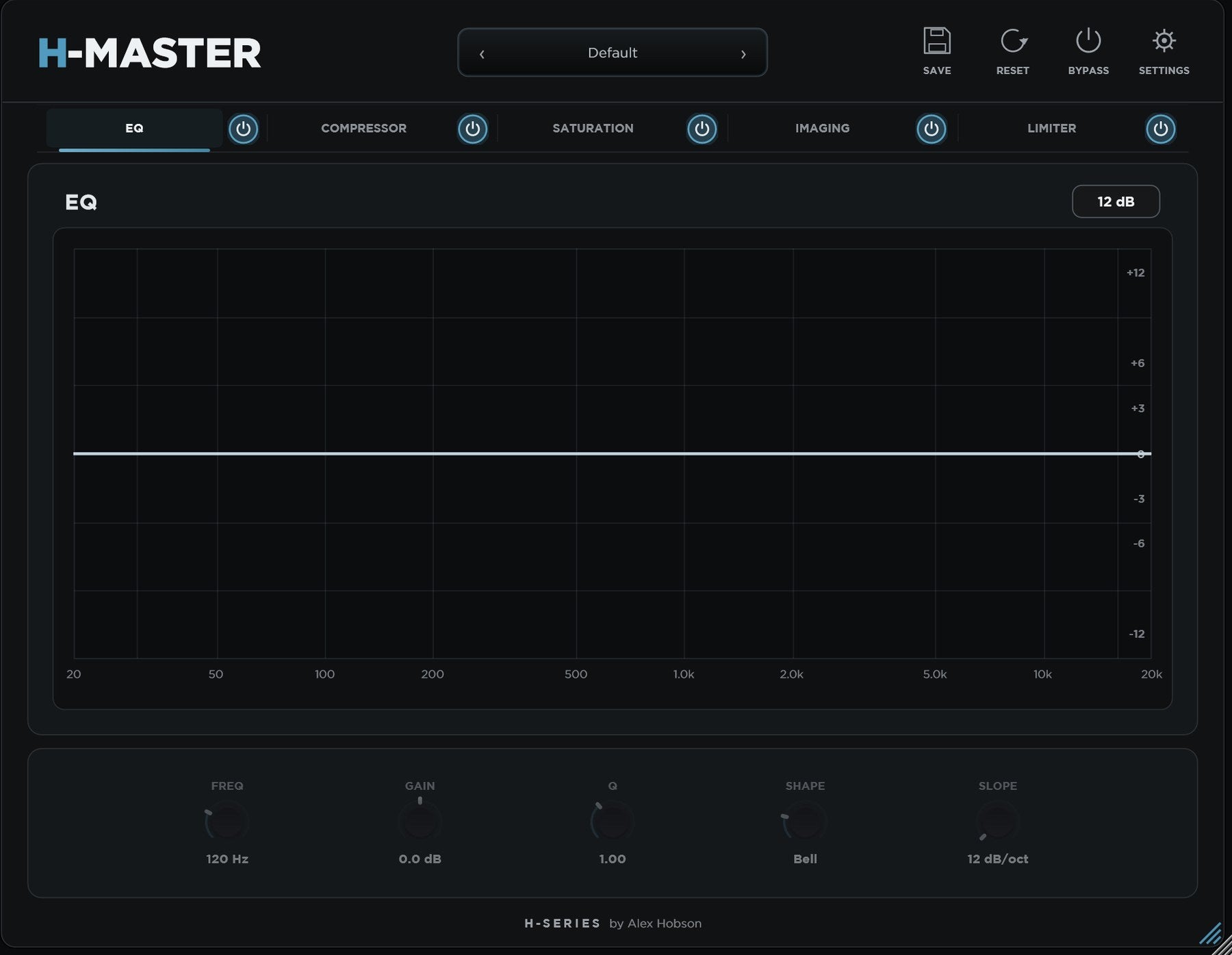
The EQ page
Five mastering tools, in one plugin.
Twelve-band EQ, bus compression, three-band saturation, four-band imaging and a true peak limiter, in the order they'd sit on a mastering chain. EQ comes before the compressor so it isn't reacting to problems you're about to cut, and the limiter sits last to set the ceiling. Each section bypasses on its own, and a new instance opens flat, so you build the master up rather than stripping back a preset.
EQ
A broad tonal adjustment and a narrow resonance need different treatment. H-MASTER gives you up to twelve bands, with shelves and bells for shaping the balance and cuts or notches for more focused work. The EQ opens flat. Add a band where you need it, and solo that band to hear the area you're adjusting before returning to the full mix.
Compressor
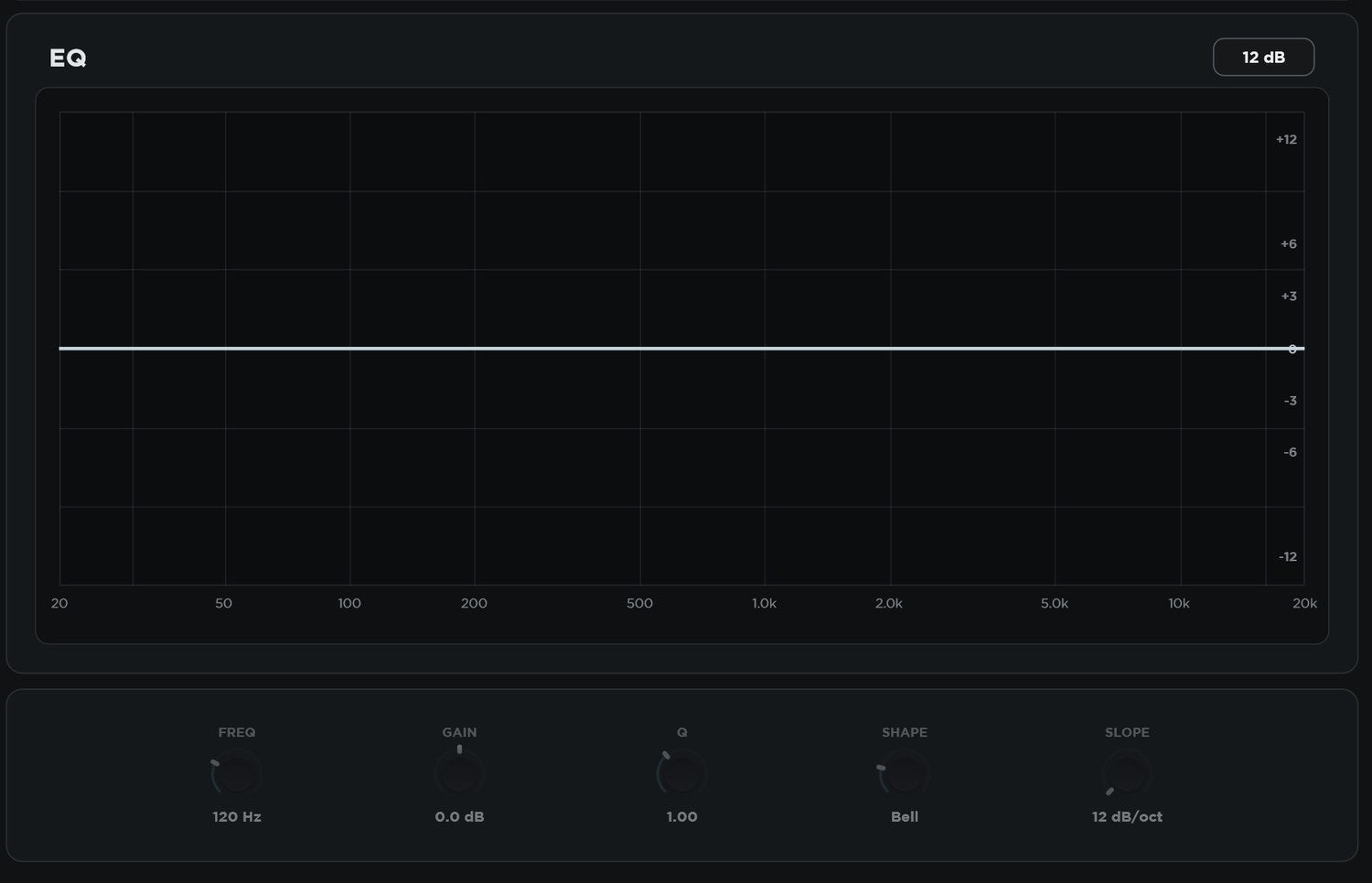
The gain reduction history helps you see whether the compressor recovers between kick hits or keeps holding the mix down. Adjust attack and release against the rhythm, then use Mix to blend in the amount of compression you want. A sidechain high-pass reduces the low end's influence on detection when the kick is driving too much gain reduction.
Saturation
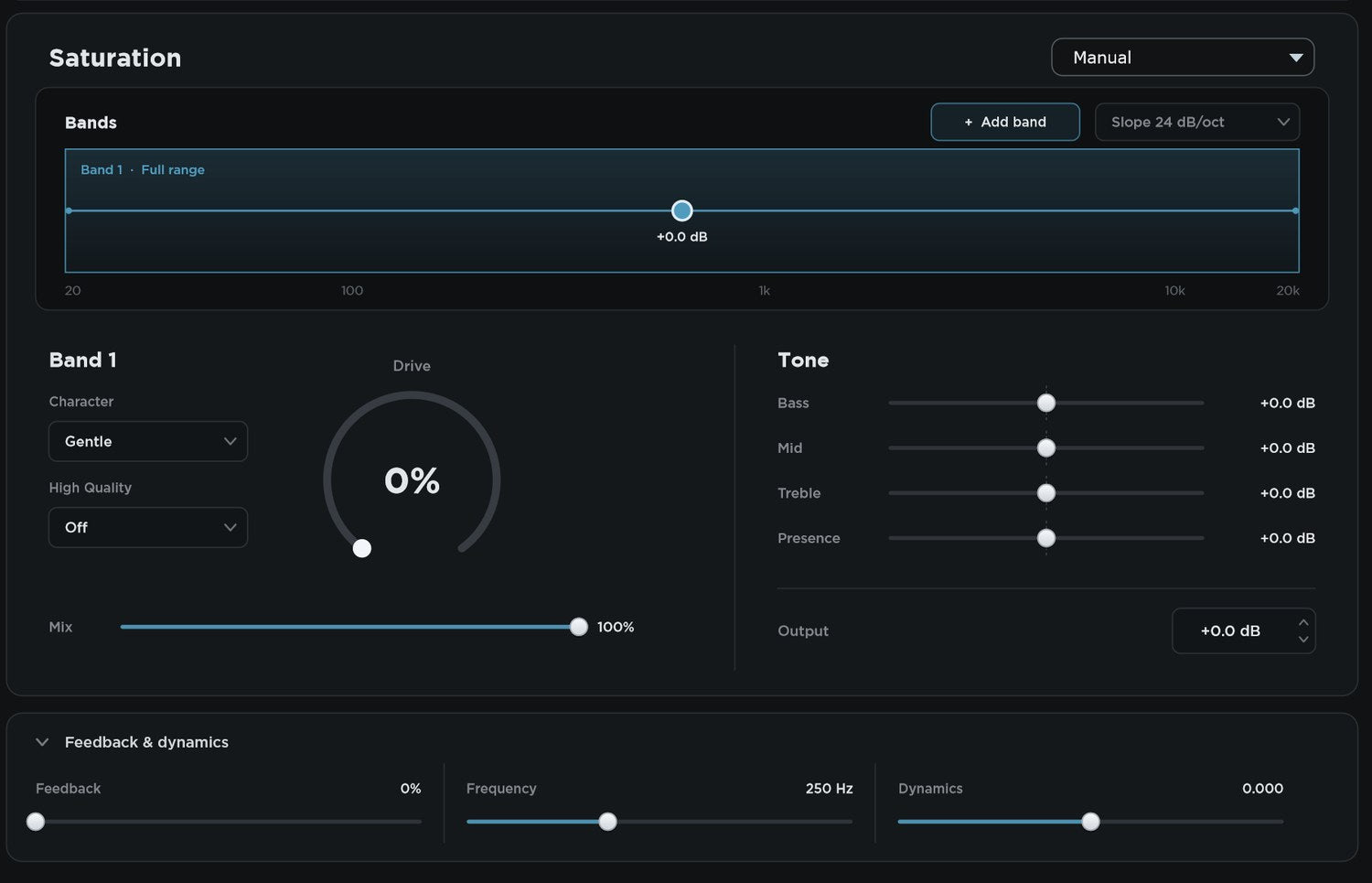
You might want more harmonic weight in the bass while the hats are already bright enough. Up to three saturation bands let you apply different amounts of drive to different frequency ranges. Set the crossovers around the part of the mix you want to work on, then use each band's Mix control to judge how much of the treatment belongs in the master.
Imaging
Four width bands let you open up the upper range while keeping the low end centred. The crossover points are adjustable, so the split can follow your track rather than a fixed frequency rule. Solo a band to hear what it contains, and check the full result in mono after widening it.

Limiter
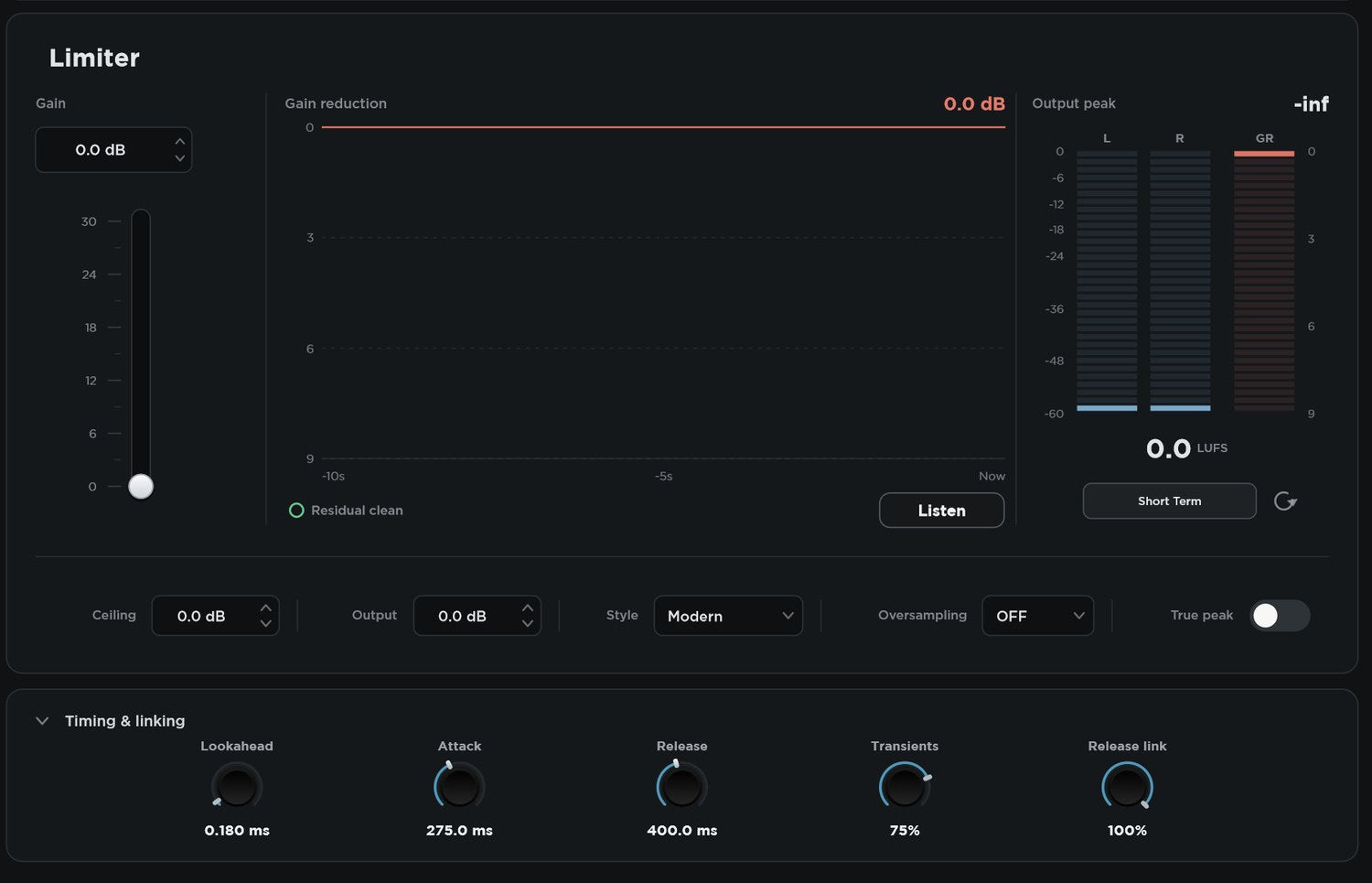
As you push the gain, listen to the kick's attack and the space around the vocal. The Listen button plays the residual, making it easier to hear which parts the limiter is changing. Short-term LUFS and gain reduction show the level and the work involved, while the ceiling and true peak option give you control over output peaks.